SPÉGU
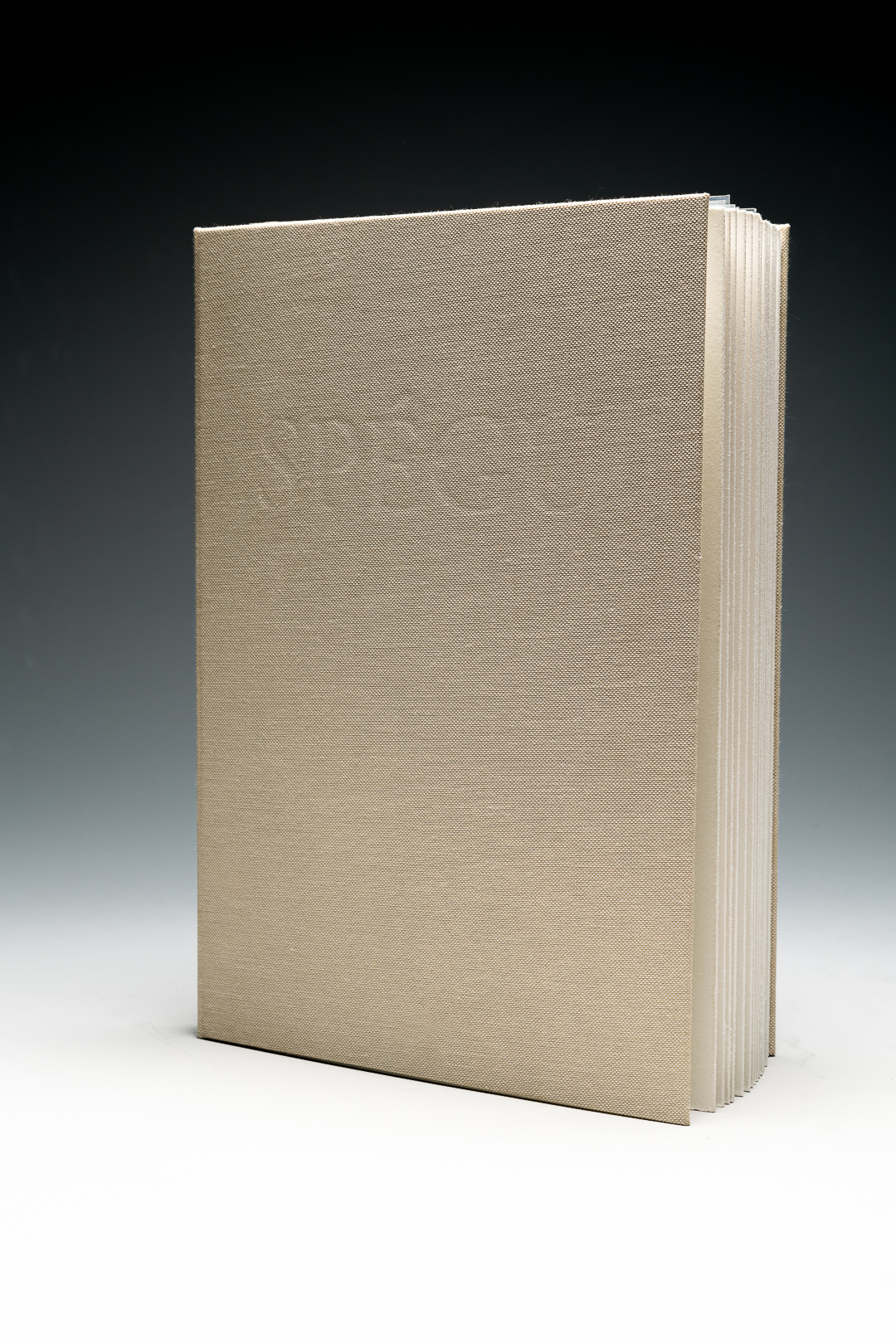
“Spégu” is an artist’s book that explores the ephemerality and decomposition of memories and idealization, through a narrative told entirely with poems and photographs.
the title (Spégu = “Scoundrel”), evokes a state of abandonment, similar to a corpse slowly decaying.
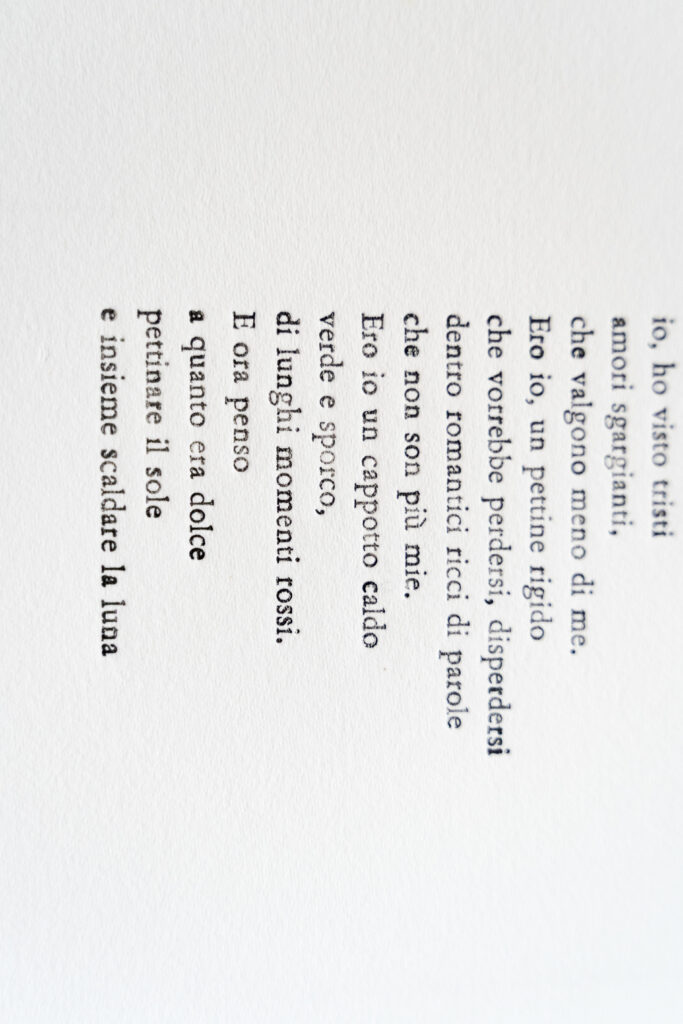
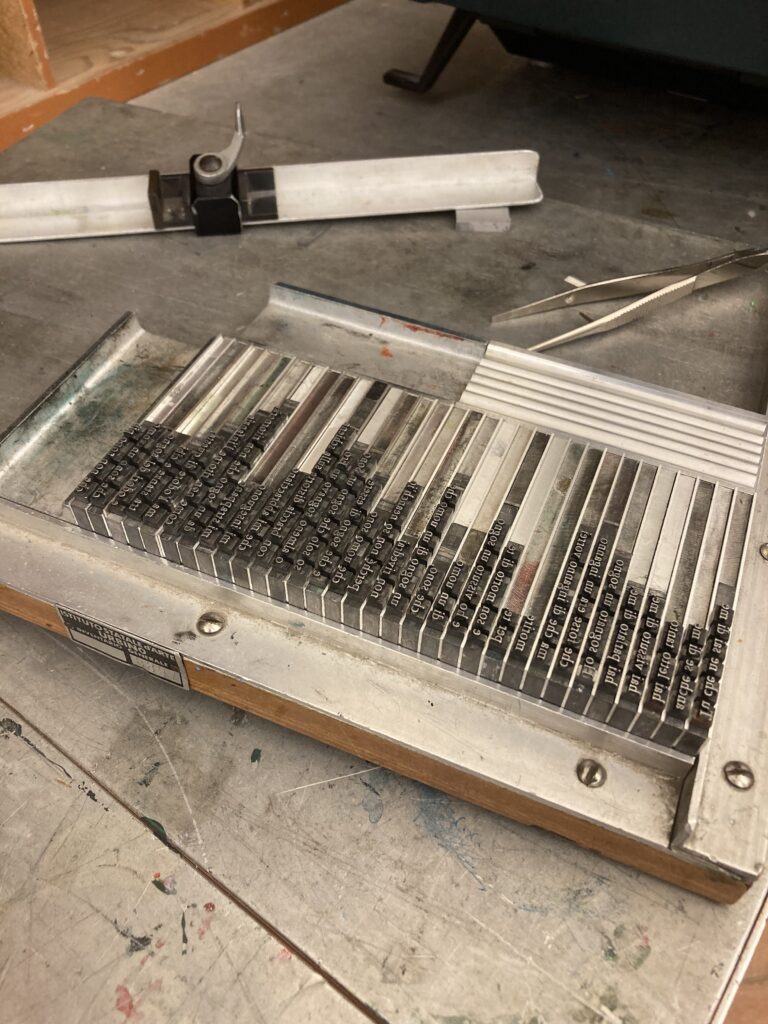
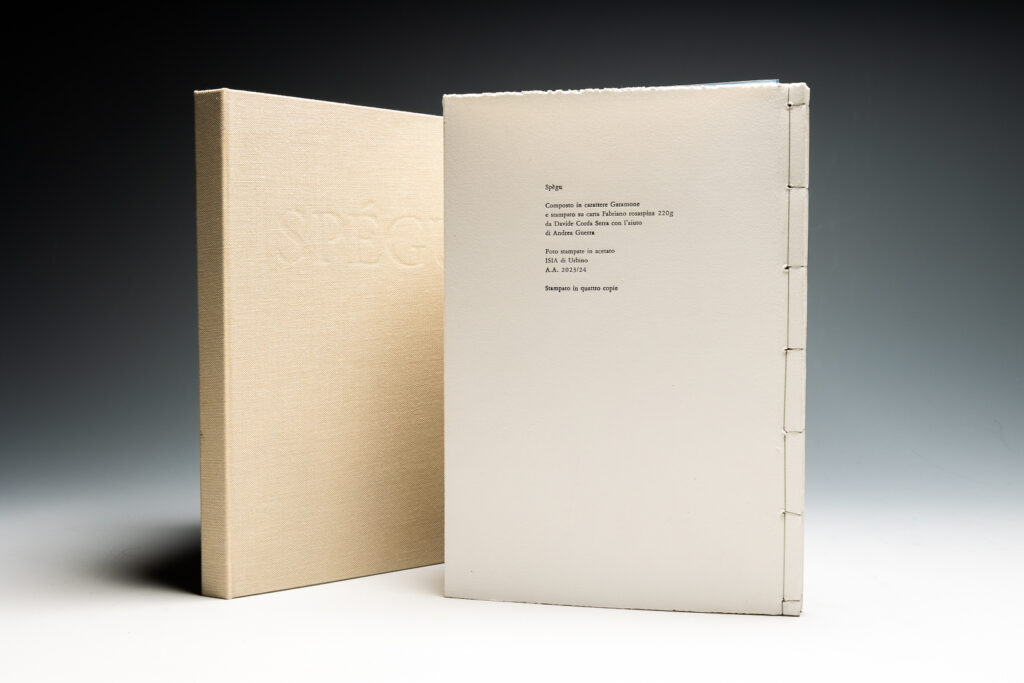
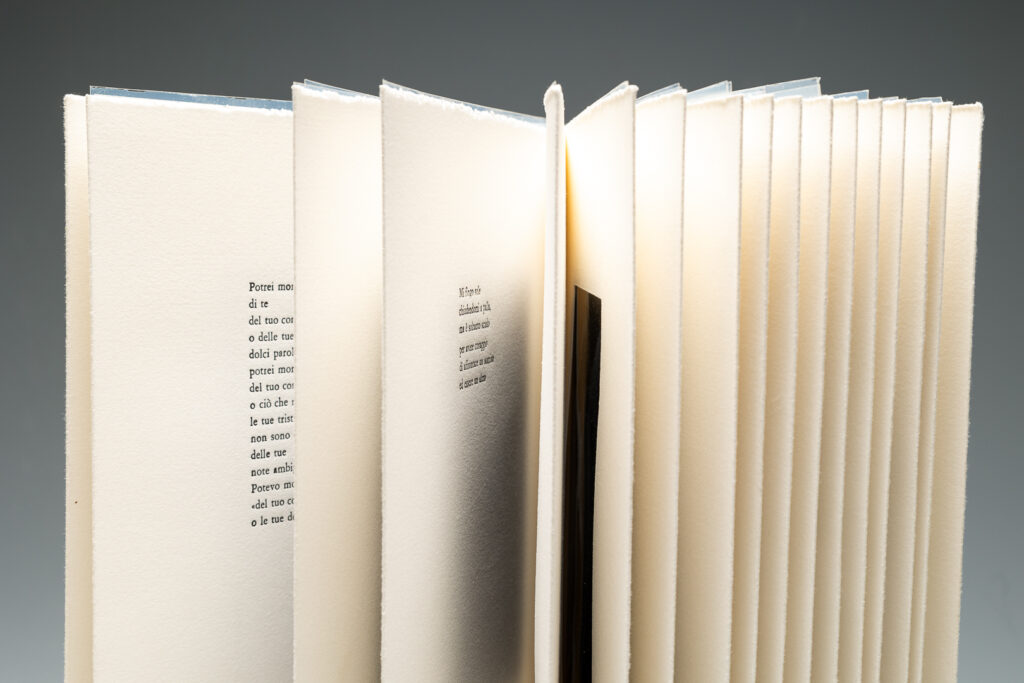
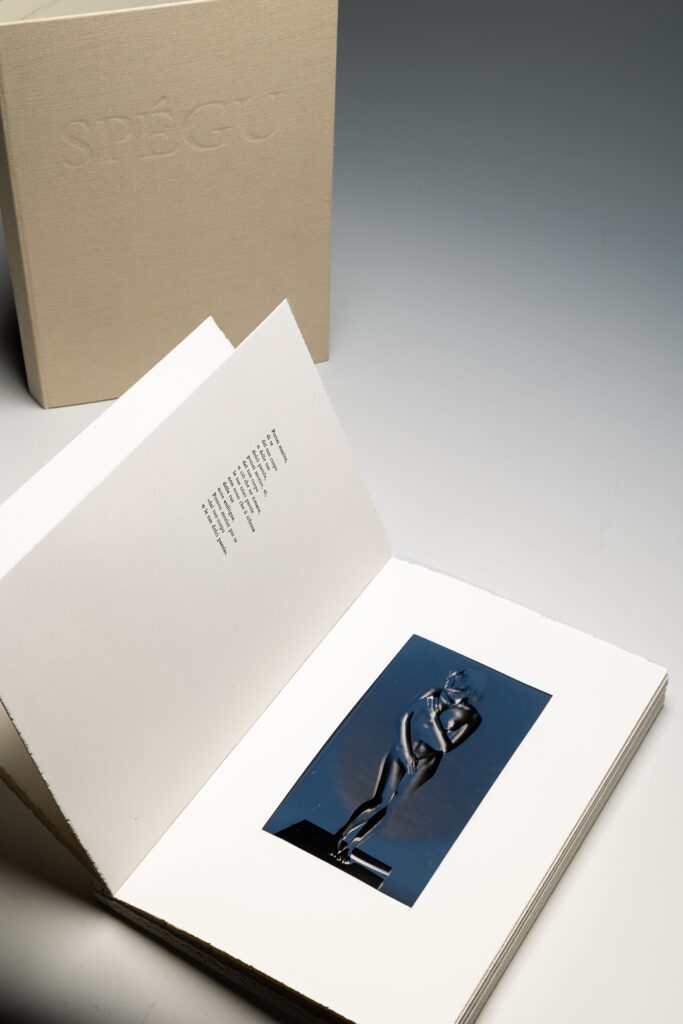
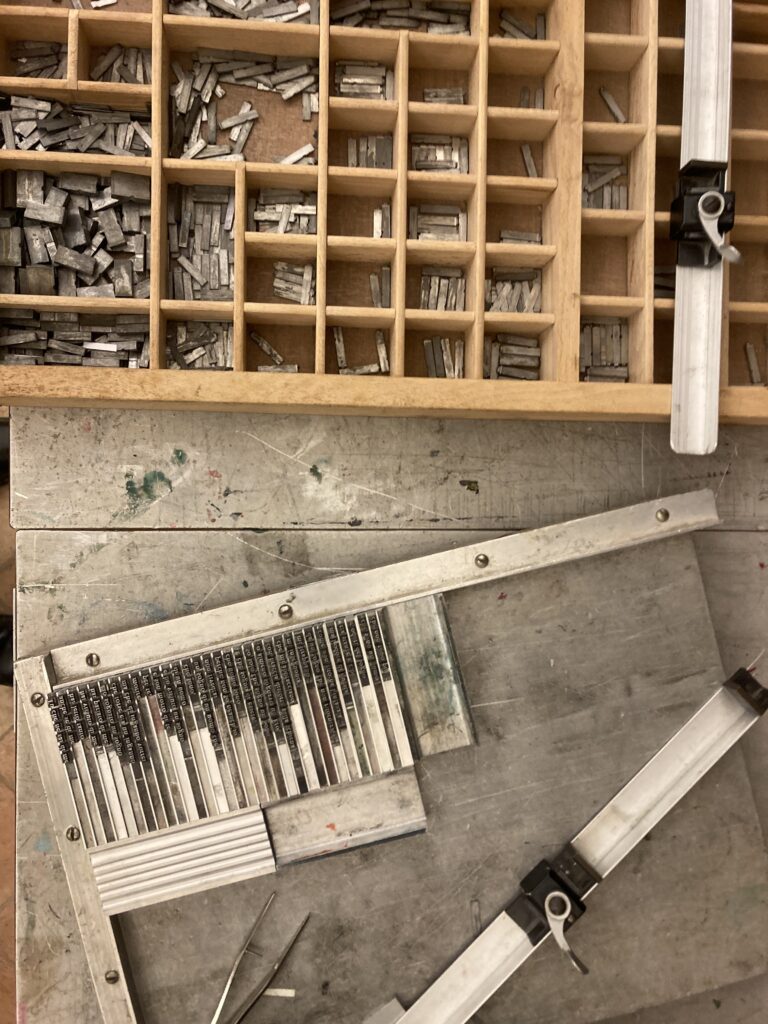
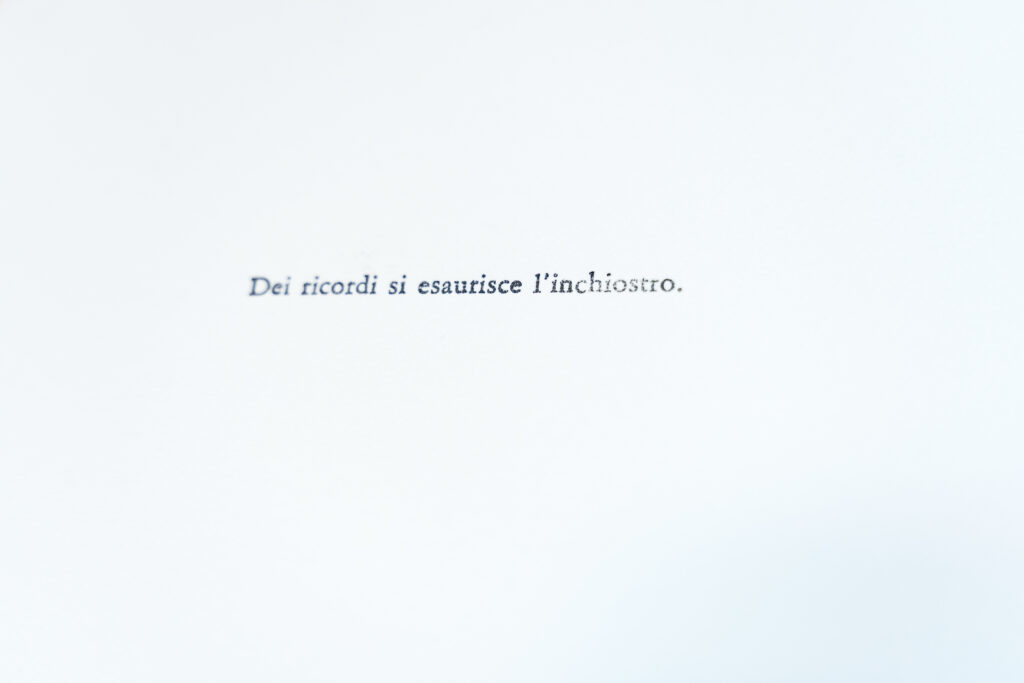
The story tells of a hypothetical relationship between two lovers, lived and narrated in the first person through poems written after the end of the relationship. Spégu was created in four copies, using Garamond movable type on 220g Rosaspina paper, with photographs printed on acetate, both positive and negative, to create a visual effect of image decomposition in two layers.
Most of the photographs depict a hypothetical journey taken as a couple, but one that fades over time, just as the photographed figures also fade and distort, an effect I achieved by photographing directly onto a flexible mirror.
To reinforce the concept of the fleeting nature of memories, the cover is designed to be disassemblable, as if the book itself were coming apart. The ink is never entirely uniform, and the debossing on the cover is faint to give an evanescent appearance. The thread used in the Japanese binding is gray, simulating a lack of ink. I chose this type of binding because the sheets I used are inverted signatures. By applying gluealong the lower fold of each signature, I was able to insert the acetate sheets, effectively using the inverted signature as a pocket. I chose an intaglio paper, which I then engraved to create a perceptible contrast when reading the poems, as they tend to be bitter but softened by tenderness; similarly, the pages feel soft to the touch, but the engraving gives a subtle roughness